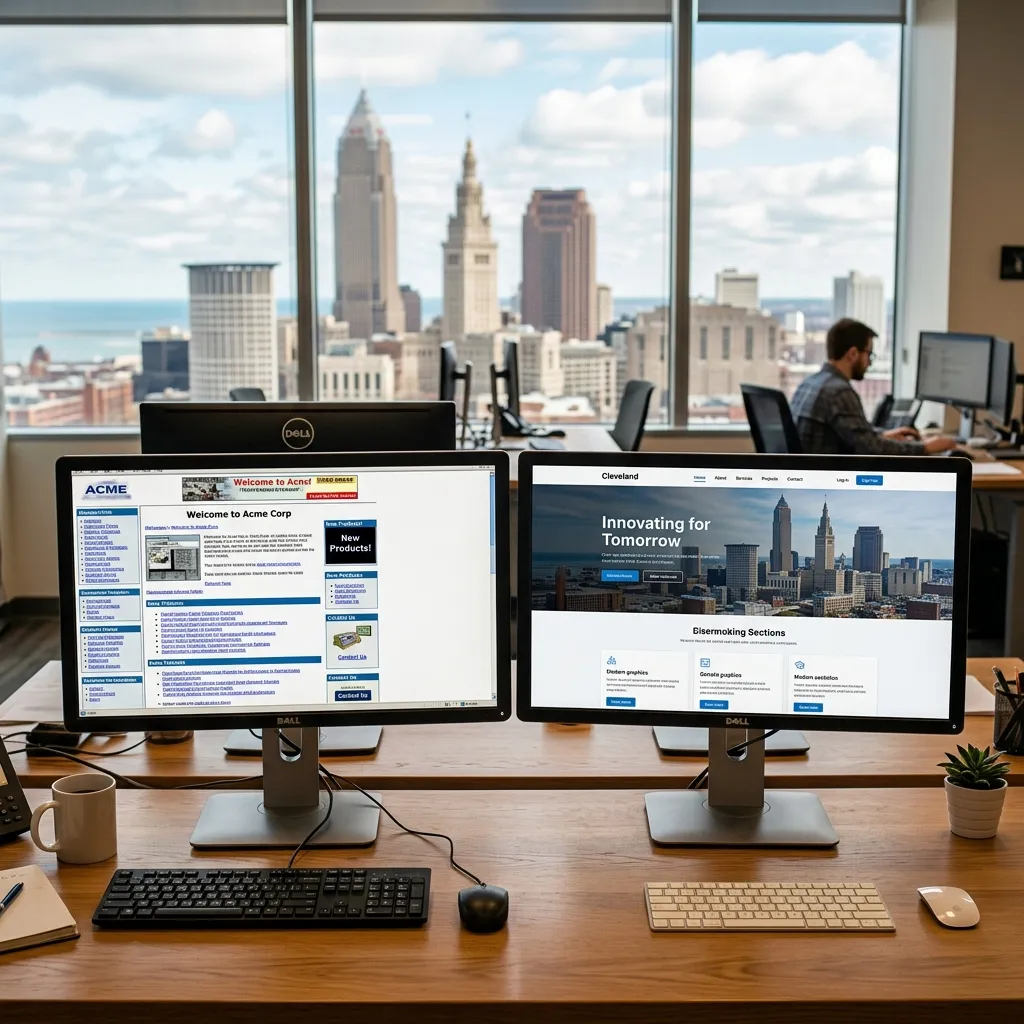

Web design and local SEO are not separate services — they're deeply connected. The way your website is structured, coded, and designed directly influences how Google ranks you in local search results. For Cleveland businesses, understanding this connection is the difference between showing up on page one and being invisible online.
Local SEO starts with how your website is built. Site speed, mobile responsiveness, heading structure, schema markup, and internal linking all impact where you appear when Cleveland customers search for your services.
The Connection Between Design and SEO
Many business owners think of SEO as something you add to a website after it's built — like a coat of paint over drywall. In reality, SEO needs to be baked into the foundation. Google's ranking algorithm evaluates dozens of design-related factors including page speed, mobile usability, content structure, and user experience signals.
If your website was built without SEO in mind, retrofitting it later is like trying to add a basement after the house is already standing. It's possible, but it's expensive, messy, and never as strong as building it right from the start.
Site Speed: The Silent Ranking Killer
Google has confirmed that page speed is a ranking factor for both desktop and mobile search. In Cleveland's competitive local market, a one-second difference in load time can mean the difference between ranking #3 and ranking #13.
Design decisions that destroy site speed:
- Unoptimized images: A single uncompressed hero image can add 3-5 seconds to your load time.
- Excessive animations: Flashy effects look impressive but can cripple performance on mobile devices.
- Bloated code: Templates loaded with unused CSS and JavaScript slow everything down.
- Poor hosting: A $5/month shared hosting plan can't deliver the speed Google expects.
Design decisions that boost speed: compressed WebP images, lazy loading, minified CSS/JS, clean semantic HTML, and quality hosting with CDN support. Learn more about our approach to fast loading pages.
Mobile Design and Google Rankings
Google uses mobile-first indexing, which means the mobile version of your site is the primary version Google evaluates for rankings. A beautifully designed desktop site with a poor mobile experience will rank lower than a competitor with a solid mobile-friendly layout.
Key mobile design factors that affect SEO:
- Responsive viewport configuration
- Properly sized tap targets (buttons and links)
- No horizontal scrolling
- Readable text without zooming
- Fast mobile load times (under 3 seconds)
Site Structure and Content Hierarchy
Heading Hierarchy
Your heading structure (H1, H2, H3) tells Google what your page is about and how information is organized. Every page should have exactly one H1 that includes your primary keyword, followed by H2s and H3s that break content into logical sections.
For a Cleveland contractor's service page, the hierarchy might look like:
- H1: Kitchen Remodeling Cleveland OH
- H2: Our Kitchen Remodeling Process
- H2: Kitchen Remodeling Pricing
- H2: Why Cleveland Homeowners Choose Us
Internal Linking Architecture
How your pages link to each other tells Google which pages are most important and how topics relate. A flat site structure where every important page is accessible within 2-3 clicks from the homepage performs better than deeply nested architectures.
Create dedicated service area pages for each city you serve — Lakewood, Parma, Beachwood, etc. Link these from your main service pages and footer. This internal linking strategy signals geographic relevance to Google and improves Map Pack visibility.
Schema Markup: Speaking Google's Language
Schema markup is structured data you add to your website's code that helps Google understand your business information. For local SEO, the most important schema types include:
- LocalBusiness schema: Your business name, address, phone, hours, and service area.
- Service schema: Individual services you offer with descriptions.
- FAQ schema: Structured FAQ content that can appear directly in search results.
- Review/Rating schema: Customer reviews and star ratings displayed in SERPs.
- Breadcrumb schema: Navigation path that helps Google understand site hierarchy.
Most Cleveland business websites lack proper schema markup entirely. Adding it gives you an immediate competitive advantage because Google has richer information about your business than your competitors.
"After implementing comprehensive schema markup for a plumbing company in Parma, their click-through rate from Google search results increased by 35% — without changing their ranking position. The rich snippets (star ratings, business hours, phone number) made their listing far more clickable than competitors."
User Experience Signals
Google monitors how users interact with your website. High bounce rates, short session durations, and pogo-sticking (clicking back to search results immediately) all signal to Google that your page didn't satisfy the searcher's intent.
Design improvements that boost UX signals:
- Clear visual hierarchy that guides the eye
- Above-the-fold content that answers the search query immediately
- Easy-to-scan layouts with short paragraphs and bullet points
- Trust signals (reviews, certifications, portfolio) visible without scrolling
- Obvious calls-to-action that don't require hunting